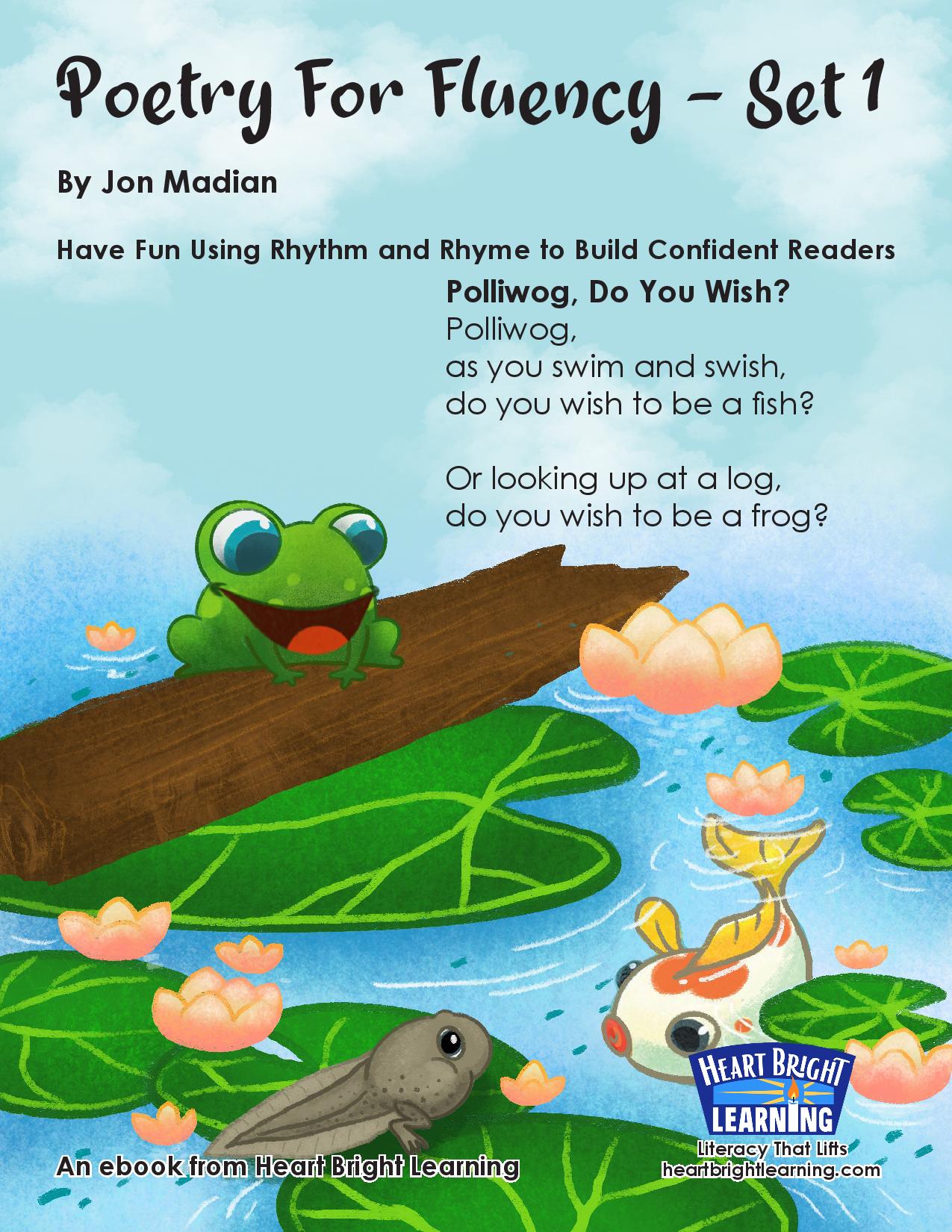
Poetry For Phonics & Fluency - Set 1

Poetry For Phonics & Fluency - Set 1

Regular price $10 USD
Regular price Sale price $10 USD
Sale Sold out

Building the Foundation for Early Readers

Short vowels, blends, and the joy of verse — Set 1 gives beginning readers their first confident steps into literature and fluency.

Poetry naturally awakens children’s minds to find word and sound patterns that build meaning. Created for young readers, this playful poetry collection helps children progress from foundational phonics to broad-based fluency. The natural structure of poems creates a playful "verse universe" that shows—rather than tells—how the code works. Joyful rhythms, rhymes, and themes engage students in close reading, building comprehension and confidence. Whether a poem bounces or pounces, it announces — through carefully nested scaffolds — that reading fluently is fun for everyone!

Set 1 uses the natural structure of verse to create a playful “verse universe” that shows — rather than tells — how the code works. These ten poems bounce with rhythm and rhyme, giving early readers the repeated exposure they need to develop automatic word recognition, confident decoding, and expressive oral reading — all while keeping reading genuinely fun.

Poems included in Set 1:

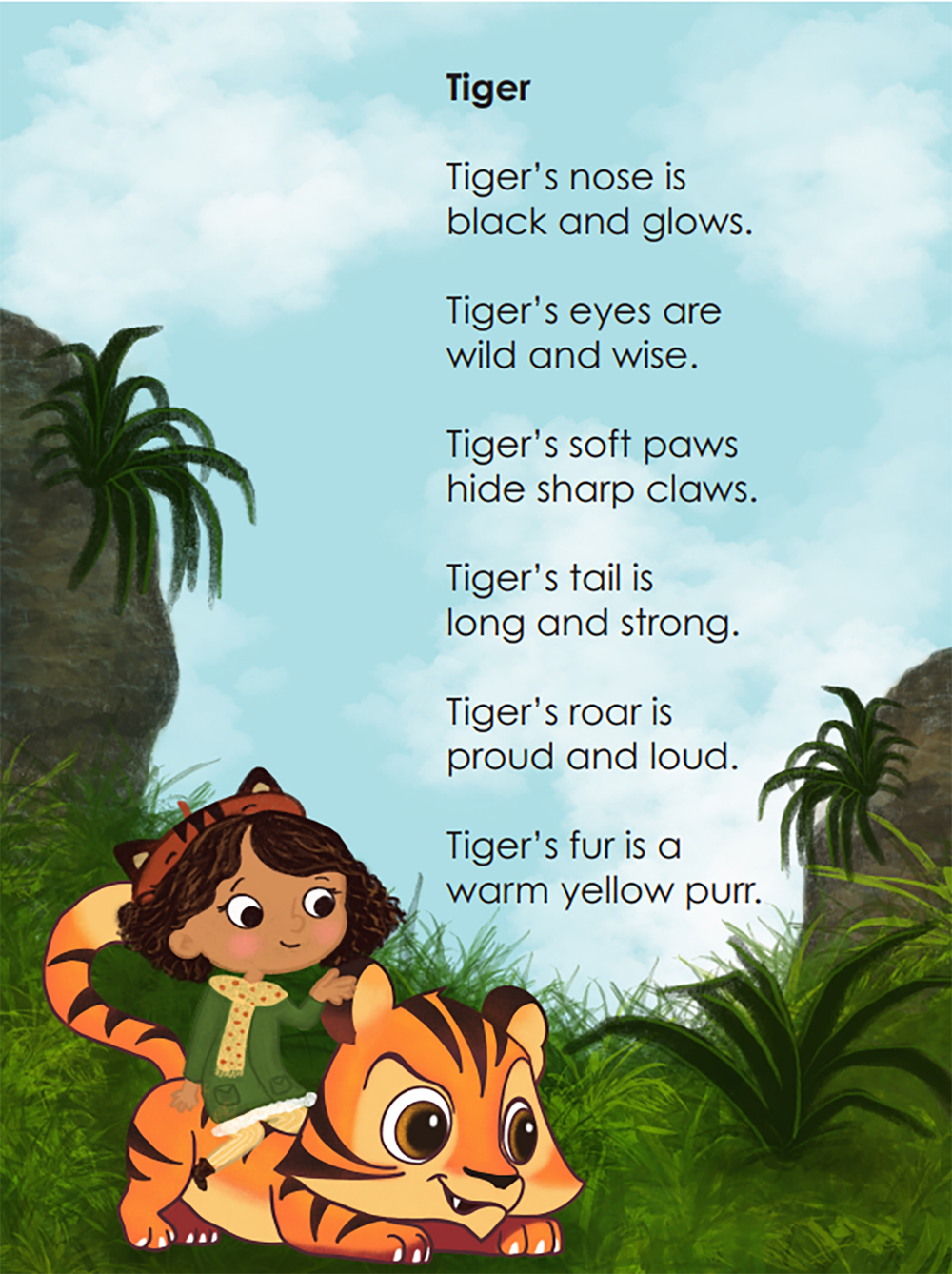
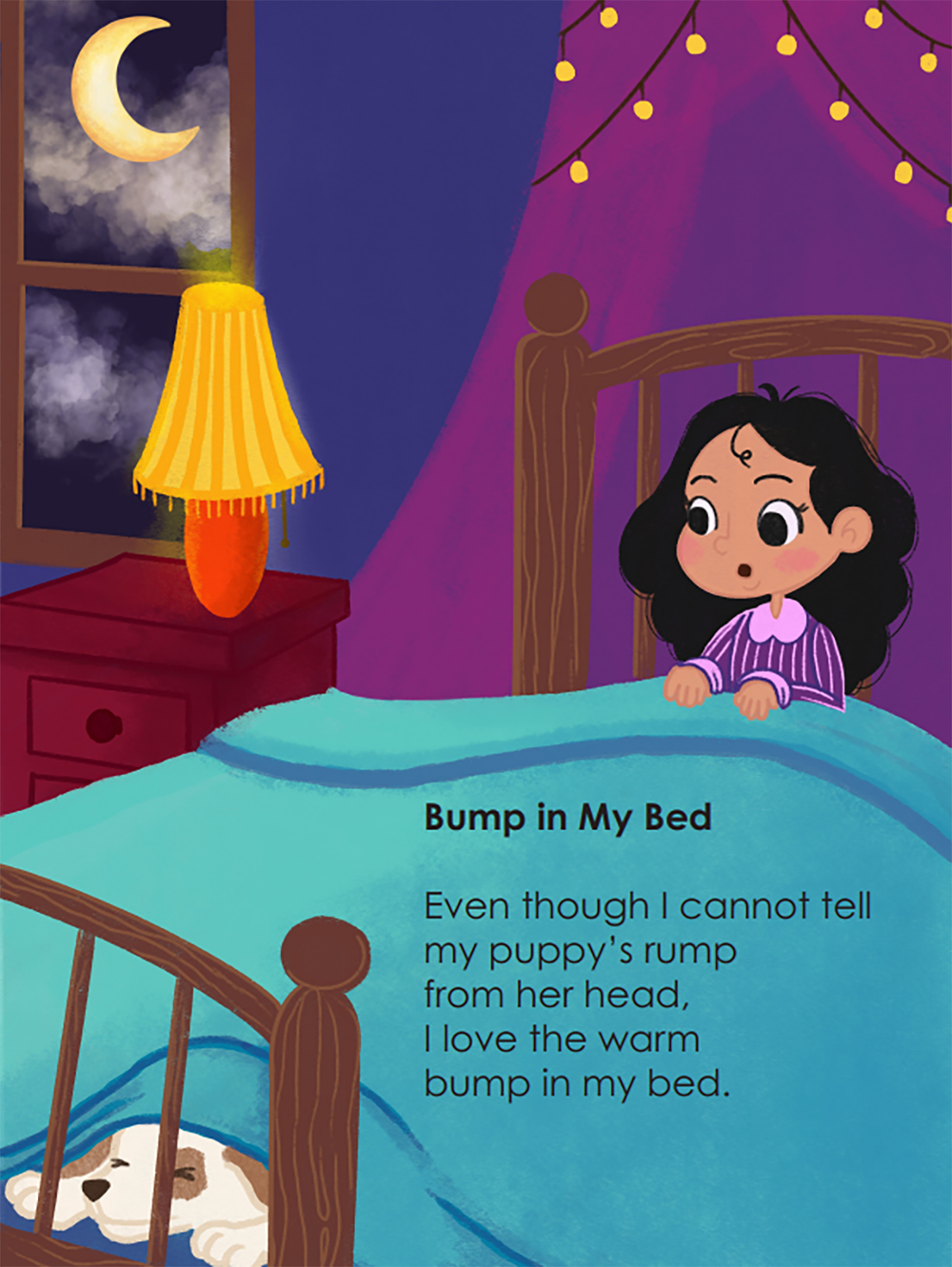
Fetch a Cup of Sky · Honeybee’s Specialty · I Can Fly · One Animal Parade · Polliwog, Do You Wish? · The Trick to Hopping · Bump in My Bed · Tiger · Sky Sunny Ride · Nip Nibble

The Instructional Practice

1.  Foundational Phonics Through Verse: Poems are carefully crafted around short vowels and consonant blends, giving early readers repeated, joyful encounters with the patterns they most need to practice.

2.  Fluency Through Rereading: The playful themes and natural musicality of verse invites children to read poems again and again — each rereading building speed, accuracy, and expression without feeling like drill.

3.  Phrasing and Prosody From Day One: Rhythm and line breaks gently teach children to group words into meaningful phrases, laying the groundwork for reading with comprehension and confidence.

4.  Speaking and Listening as Literacy: Reading poems aloud, performing them, and listening to classmates or family members builds the oral language foundation that supports future reading growth.

What you get

Professional narration brings the lively pond characters to life — the curious polliwog, the cheerful frog, and the playful fish — using warm, rhythmic voices that match the musical flow of each poem and keep young readers engaged.

What you learn?

Children explore rhythm, rhyme and sound patterns while gaining fluency and confidence in reading. They become attuned to language play and subtle patterns in words through enjoyable poetry-based practice.

Shipping

Digital products are delivered instantly via email after purchase confirmation.

Return policy

Full refund within 30 days if you're not completely satisfied with your purchase.

View full details

What Parents and Teachers Are Saying

Poetry for Fluency playfully builds natural scaffolds to show children how the code works. It gives kids the thrills of learning to read by exploring good writing.

Product Details

  • Title: Poetry For Phonics & Fluency - Set 1
  • Author: Jon Madian
  • Guided Reading Age: 4-8
  • Themes: Early Fluency, Phonics, Decoding, Oral Reading
  • Format: eBook
  • Series: Poetry for Fluency Collection
  • Poems:

    10 poems

product.title
  • Social-Emotional Learning

  • Seeding Discussions

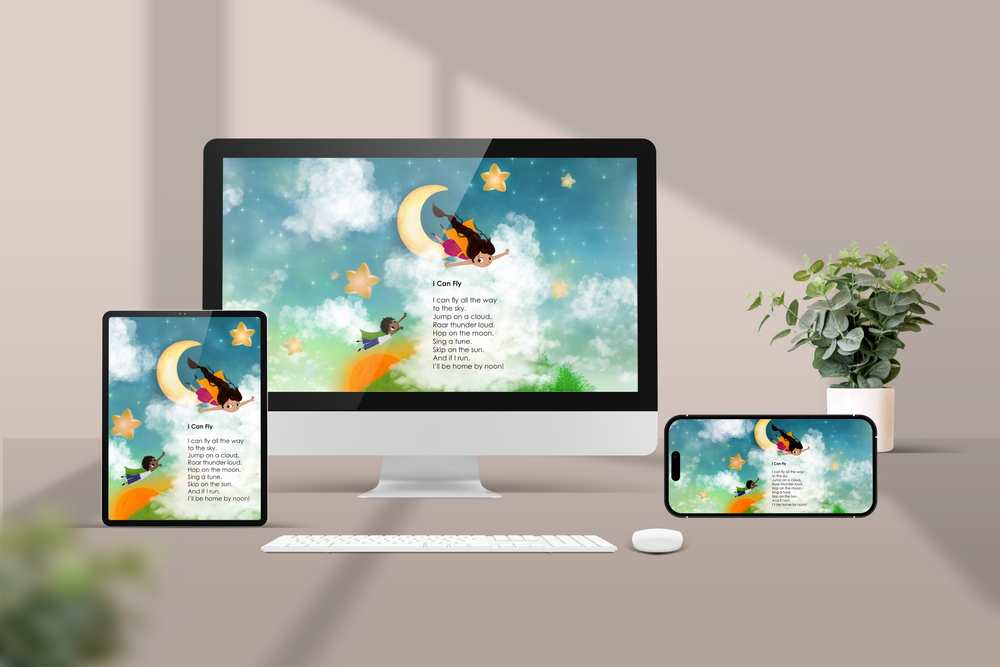
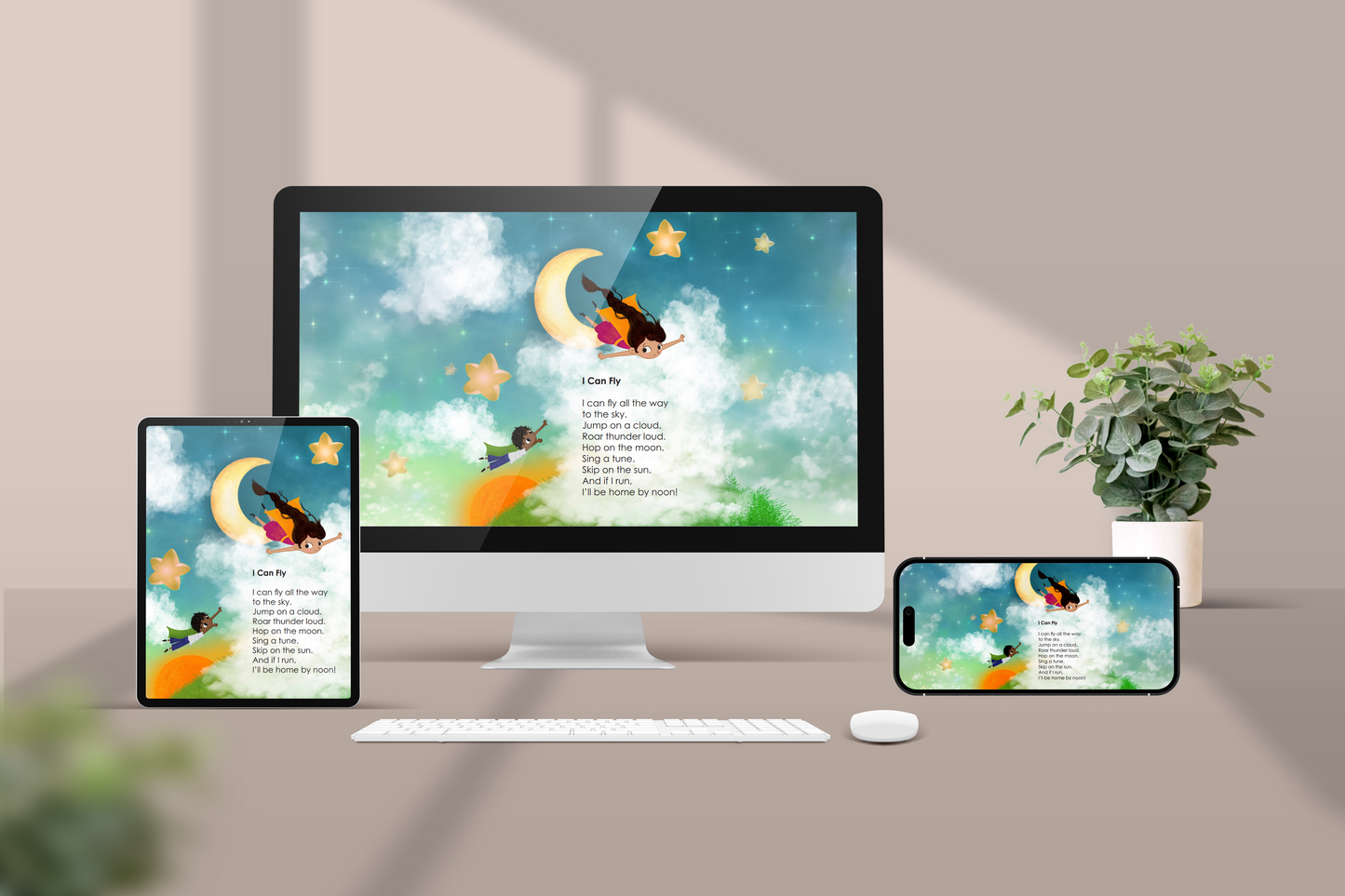
  • Multi-Format Access

  • Expert Developed

Frequently Asked Questions

What phonics skills does Set 1 target?

Set 1 focuses on short vowels and consonant blends — the foundational patterns early readers encounter first. These patterns appear naturally within the rhythm and rhyme of each verse, giving children meaningful, repeated exposure without rote repetition.

Is Set 1 appropriate for pre-K children?

Yes. Set 1 is designed for ages 4-8. The poems are highly readable and supportive, making them a wonderful fit for children who are just beginning to notice that letters make sounds, as well as those starting to independently decode simple words.

How do I use these poems in the classroom or at home?

Poems can be read aloud together, performed, echoed, or used as a shared reading text. Repeated readings over time build automaticity, while discussion of rhyme, rhythm, and themes deepens comprehension. The poems work equally well in one-on-one, small group, and whole-class settings.

Do I need Set 1 before using Set 2 or Set 3?

The sets are designed as a progression, with each building on the skills of the previous. Starting with Set 1 gives readers the strongest foundation — but educators familiar with their students’ reading levels may choose to begin at whichever set best matches current skills.

Can these poems be used alongside other phonics programs?

Absolutely. The Poetry for Fluency sets complement any systematic phonics program. They are not a standalone curriculum. They are a powerful supplement that uses verse to bring the patterns children are learning.

About the Author

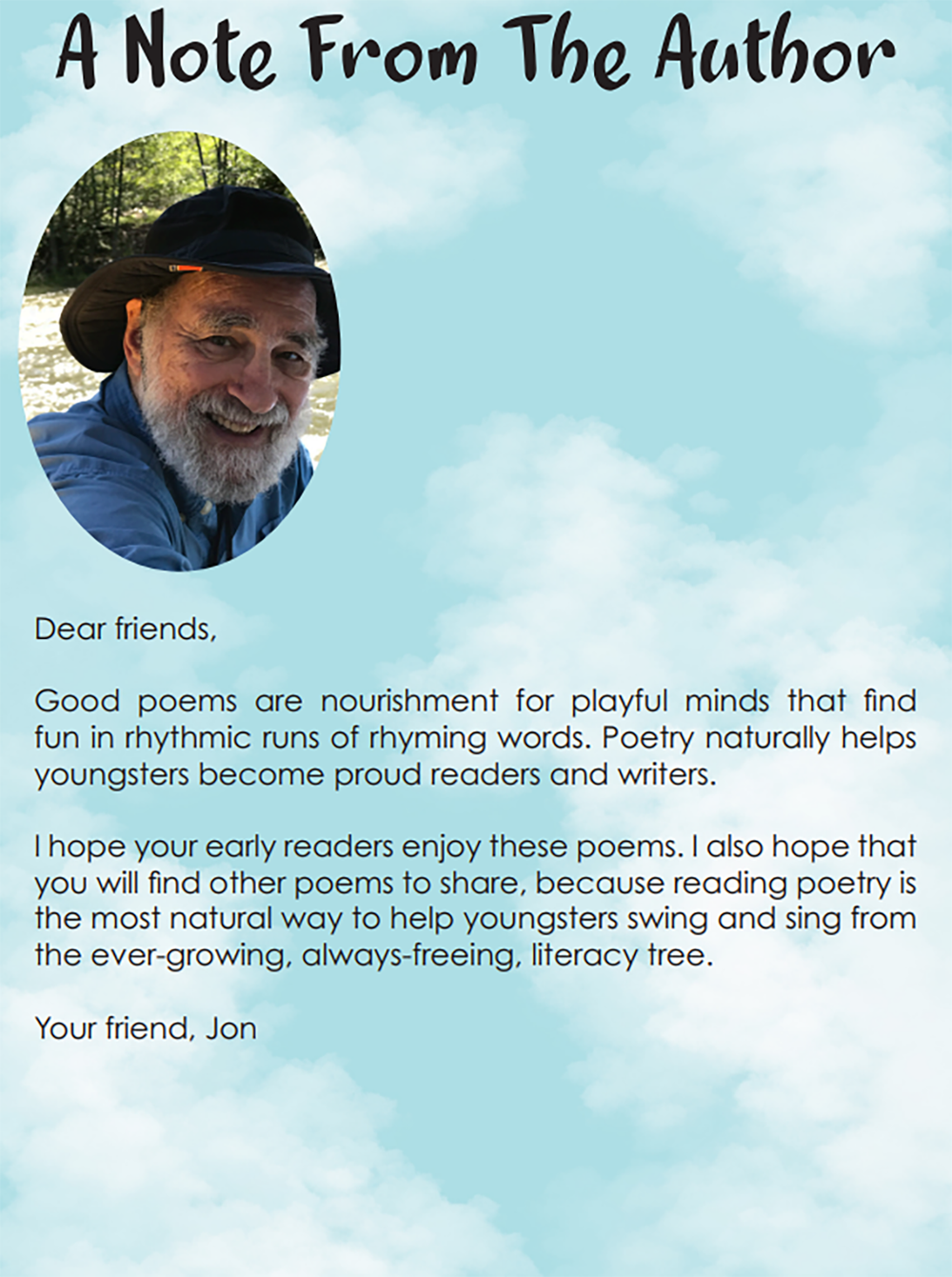
Jon Madian

About the Author

Jon Madian

Jon, an educational psychologist, and his wife, Karen, an instructional designer, received numerous grants to support learner-centered education throughout their careers. He founded the Artist-in-Residence Reading Project in Los Angeles’s inner-city schools and later co-founded Humanities Software with Karen. Their early literacy curriculum became part of Apple’s early learning initiatives and IBM’s writing programs. Over the course of their careers, Jon and Karen developed more than 100 reading, writing, and process-based programs for print and software, consistently focusing on empowering and inspiring students in educational settings. Their 11 grandchildren and one great-grandchild continue to fuel their commitment to enriching education. Today, through Heart Bright Learning, they are helping parents and teachers reimagine education for the 21st century by developing resources that inspire and empower children to understand themselves, others, and their world through observation, reflection, and process-based learning.