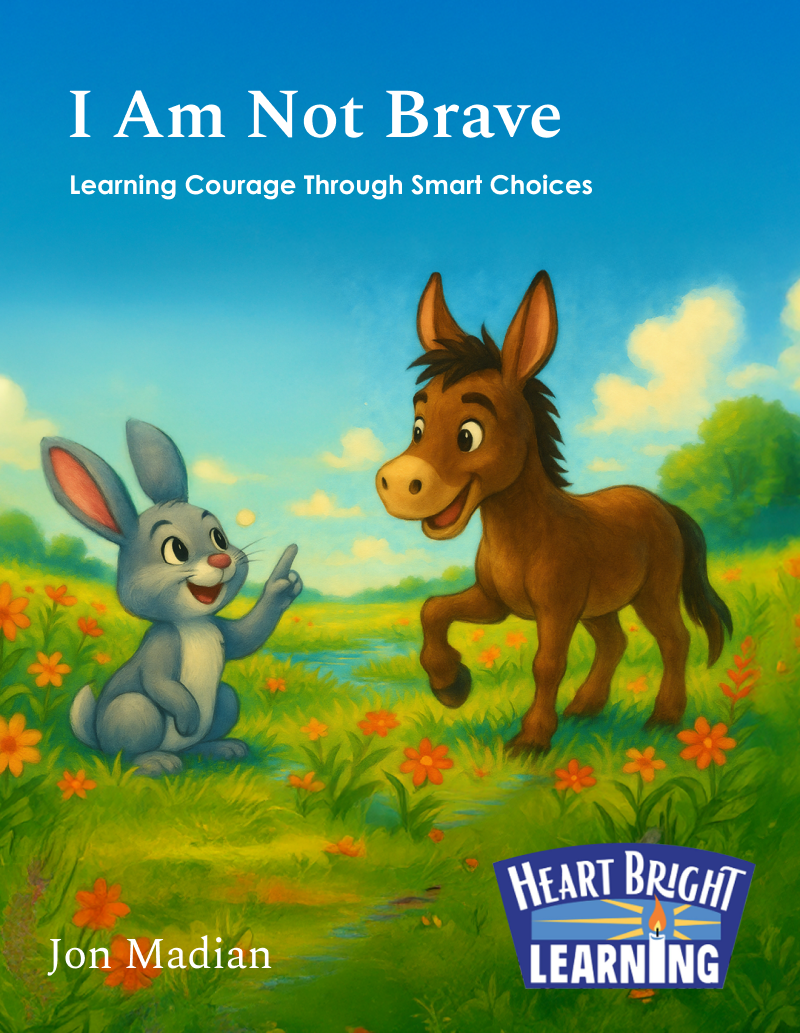
I Am Not Brave

I Am Not Brave

Regular price $10
Regular price Sale price $10
Sale Sold out

Or choose your price at checkout.

What you get

Full-color eBook
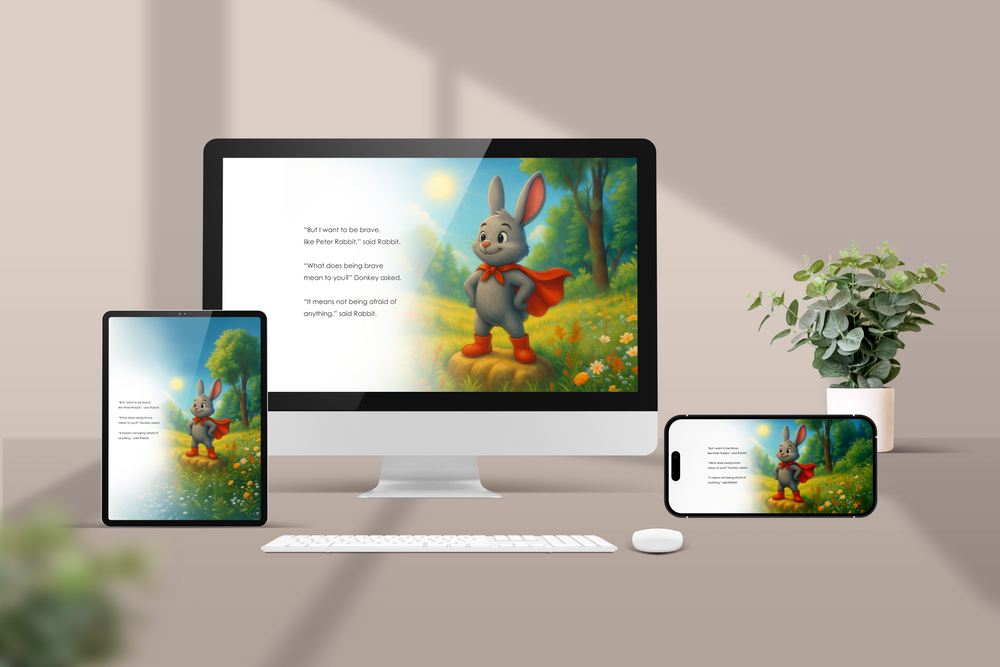
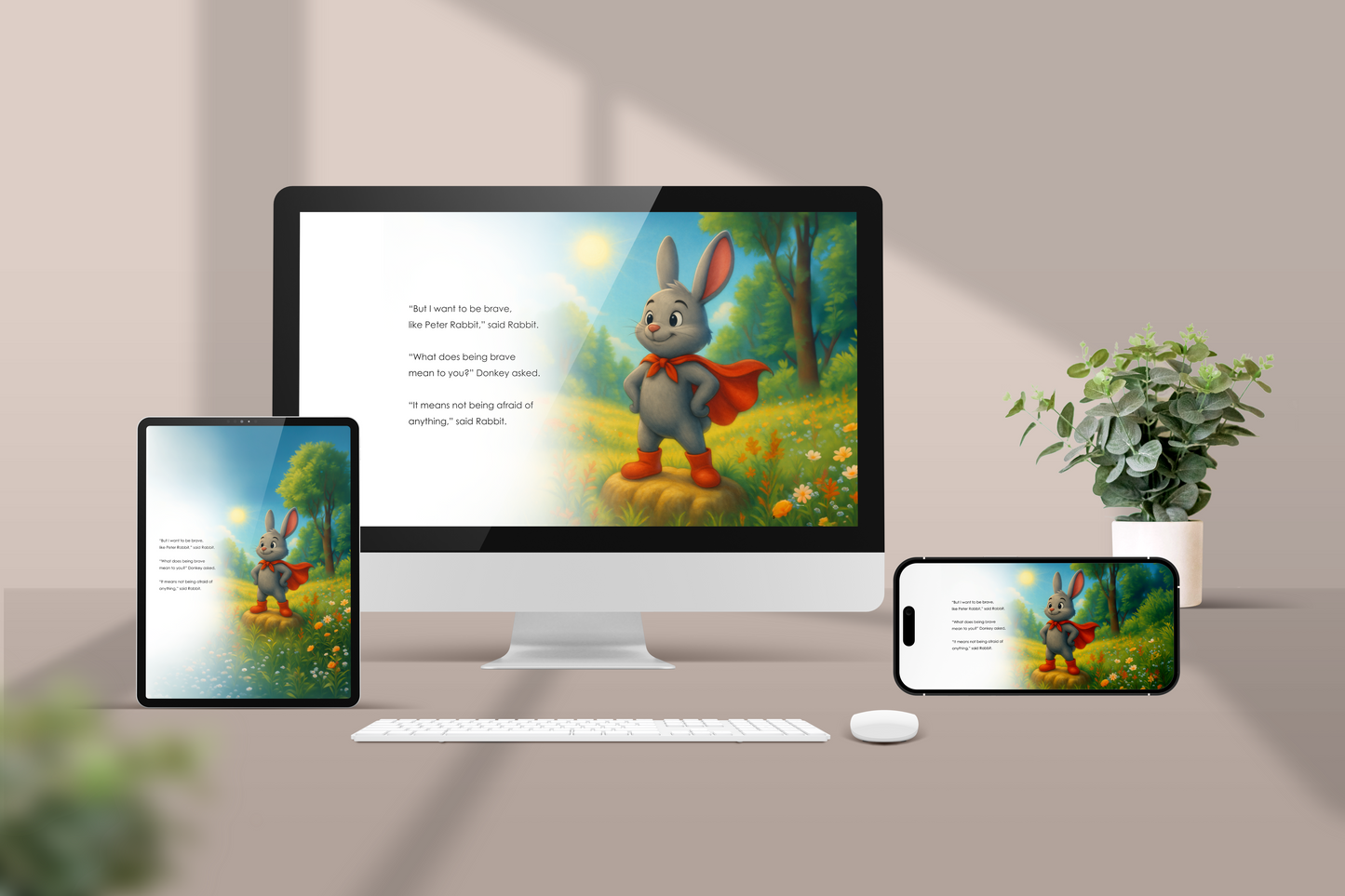
Complete story with colored illustrations and professionally narrated audio to listen along as you read.

What you learn?

Children discover that true bravery means making wise choices and listening to their instincts.

Shipping

Digital products are delivered instantly by email after your purchase is confirmed.

Return policy

Because this is a digital product with instant access, we’re not able to offer refunds after delivery. If you run into any download or access issues, please contact us.

View full details

I Am Not Brave

Real courage starts with knowing how you feel.

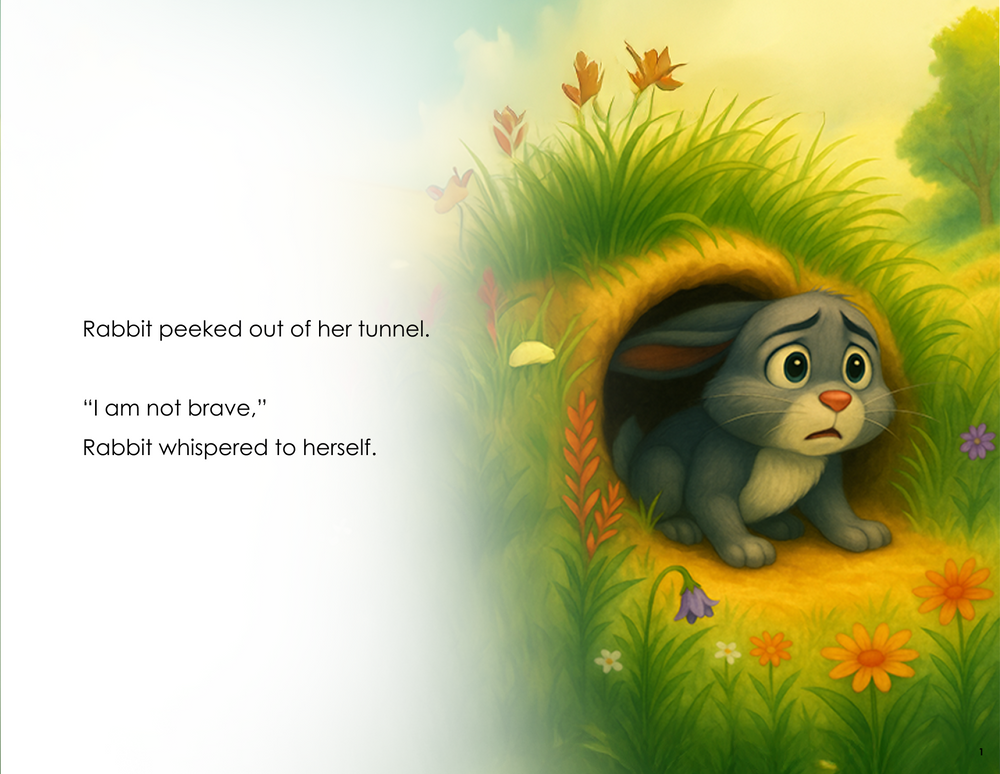
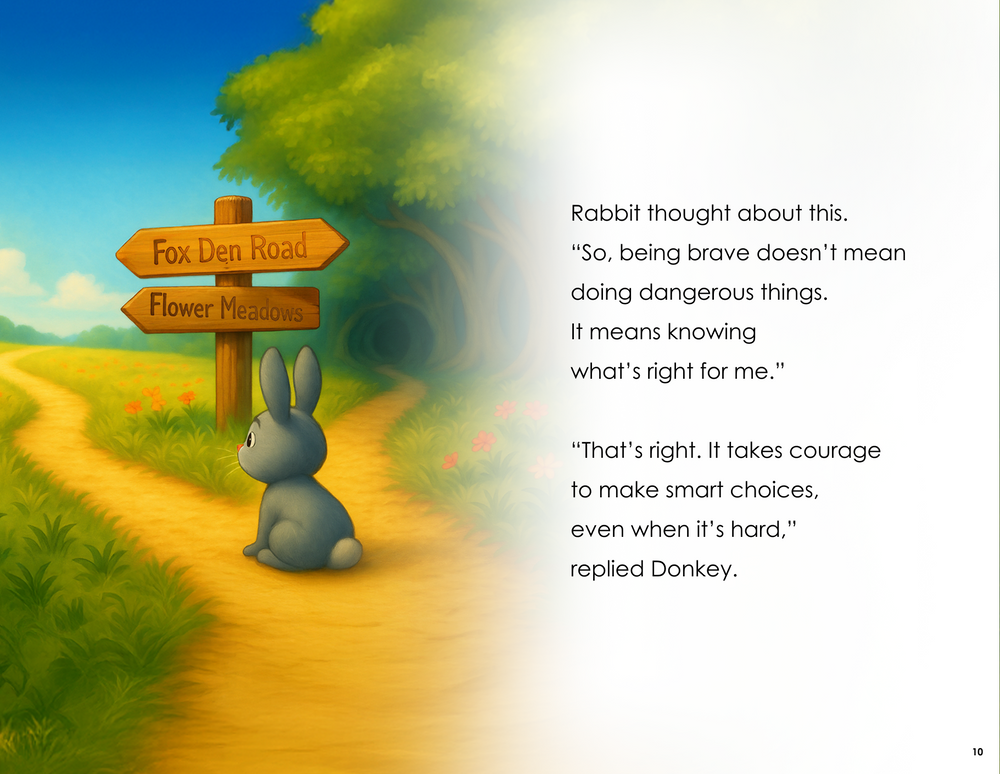
Being brave doesn’t mean being fearless—it means thinking carefully and making wise choices, even when you feel afraid. Rabbit learns from Donkey that courage is not about peer pressure or recklessness, but about self-reflection and sound judgment. Together, they model how understanding your own feelings supports responsible decision-making.

I Am Not Brave, along with the four other stories in SEL Collection 1, uses the timeless power of the fable to provide a framework for exploring feelings through listening, observing, guided discussions, and self-expression. All stories highlight all five core SEL competencies, helping children to discover how to navigate the world and grow with and in support of others. Charming animal characters invite children into the stories, letting reflection and learning flow naturally. 

For a richer, more in-depth learning experience at home or in the classroom, the I Am Not Brave Instructional Package gives educators and families everything they need to turn the story experience into a transformative conversation.


What Makes Our Books Unique? 

  1. Immersive Story Experience: A beautifully illustrated and narrated story, with highlighted text for improved reading comprehension, introduces children to the story, characters, and social-emotional lessons that the characters face. 
  2. Literature-Based Discovery: Through Rabbit and Donkey's conversation, children observe how emotions like fear can be named, validated, and reframed as tools for wise decision-making rather than signs of weakness.
  3. Social-Emotional Connection: By sharing personal experiences about fear and bravery, children build empathy and trust while exploring how their feelings connect to those of the characters.

Product Details

  • Title: I Am Not Brave
  • Author: Jon Madian
  • Guided Reading Age: 3-8
  • Independent Reading Age: 8-9
  • Themes: Social-Emotional Learning, Responsible-Decision Making, Bravery, Fear
  • Format: eBook
product.title
  • Social-Emotional Learning

    Social-Emotional Learning

    Builds emotional intelligence and self-awareness through gentle storytelling
  • Seeding Discussions

    Seeding Discussions

    Stories prompt children to discover and reflect on their inner and outer worlds
  • Multi-Format Access

    Multi-Format Access

    Supports all reading levels with narrated audio and highlighted read-along text
  • Expert Developed

    Expert Developed

    Created by dedicated reading specialists with proven classroom success

What Parents and Teachers Are Saying

The work that Heart Bright Learning is doing to support a balanced approach to reading has helped me understand how the fundamental elements of reading work together, with and beyond phonics. I have found learning about the Science of Reading to be overwhelming, but the synthesis that Heart Bright Learning provides, both in their instructional blogs and in the integrated, science-based materials that they produce for early readers, have been very helpful to my continued learning as an educator.

Frequently Asked Questions

What age group is this fable best suited for, and can it be used across mixed-age groups?

Designed for ages 3–9, the read-aloud format suits ages 3–8 and the independent reading version ages 8–9. Beginning and independent readers can be paired together for shared learning.

How does the story address the difference between bravery and recklessness?

Through Rabbit and Donkey's friendship, the story shows that acting without thinking is recklessness, not bravery. True courage means pausing to consider whether a choice is safe and wise.

What SEL competency does I Am Not Brave focus on?

The primary focus is Responsible Decision-Making, but all five SEL competencies are woven throughout — Self-Awareness, Social Awareness, Relationship Skills, and Self-Management are all modeled through Rabbit and Donkey's interactions.

How does this eBook differ from the complete instructional package?

Children can listen, read, and enjoy this eBook. The complete instructional package builds on that foundation and deepens learning through guided inquiry, creative engagement, and practical instructional support.

My child is a beginning reader — can they still enjoy this story?

Of course! This eBook, with its illustrated story and accompanying audio narration, requires no prior reading fluency.

About the Author

Jon Madian

About the Author

Jon Madian

Jon, an educational psychologist, and his wife, Karen, an instructional designer, received numerous grants to support learner-centered education throughout their careers. He founded the Artist-in-Residence Reading Project in Los Angeles’s inner-city schools and later co-founded Humanities Software with Karen. Their early literacy curriculum became part of Apple’s early learning initiatives and IBM’s writing programs.  Over the course of their careers, Jon and Karen developed more than 100 reading, writing, and process-based programs for print and software, consistently focusing on empowering and inspiring students in educational settings.   Their 11 grandchildren and one great-grandchild continue to fuel their commitment to enriching education. Today, through Heart Bright Learning, they are helping parents and teachers reimagine education for the 21st century by developing resources that inspire and empower children to understand themselves, others, and their world through observation, reflection, and process-based learning.